
TL;DR:
- Learning basic Spanish enhances cultural immersion and authentic experiences in Spain.
- Just 100 common words and a few phrases enable effective communication for travelers.
- Making an effort with the language fosters genuine connections and appreciation from locals.
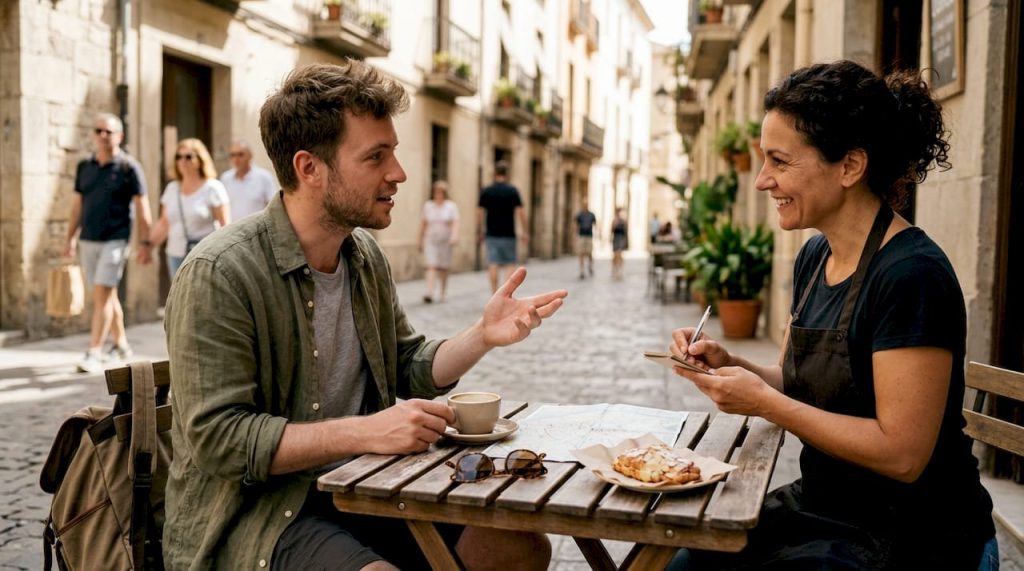
Most travelers heading to Spain pack sunscreen, a camera, and a confident belief that English will carry them through. It often does, at least in the big cities and resort towns. But the travelers who come back with the best stories, the ones who found the hidden tapas bar, got invited to a local’s home, or had a real conversation with a shopkeeper in a small Andalusian village, almost always had one thing in common. They spoke a little Spanish. Not fluently. Just enough to try. And that small effort made an enormous difference.
Table of Contents
- How basic Spanish unlocks authentic travel in Spain
- How much Spanish do you actually need before your trip?
- Practical ways to learn basic Spanish before your Spain trip
- Overcoming language barriers: real-world tips and common questions
- Our take: the real difference basic Spanish makes in Spain
- Get started with Spanish for your trip
- Frequently asked questions
Key Takeaways
| Point | Details |
|---|---|
| Authentic travel insights | Even basic Spanish opens doors to local culture, hospitality, and experiences beyond tourist spots. |
| Minimal effort, big rewards | Learning a handful of words and phrases gives you confidence and connects you to locals. |
| Accessible language tools | Modern apps and easy methods make learning Spanish for travel achievable for everyone. |
| Mistakes are welcome | Spaniards value your effort more than perfection and happily help when you try. |
How basic Spanish unlocks authentic travel in Spain
There is a version of Spain that most tourists never see. It exists just past the English-language menus, the hotel concierge desks, and the guided bus tours. Getting there does not require a language degree. It requires a few words, a willingness to try, and the cultural awareness that language is a form of respect.
Knowing basic Spanish enables deeper cultural immersion, access to local insights, hidden gems, and authentic interactions that go well beyond tourist areas. It also demonstrates respect, and locals respond to that with genuine warmth and openness. This is not just a feel-good idea. It changes what your trip actually looks like.
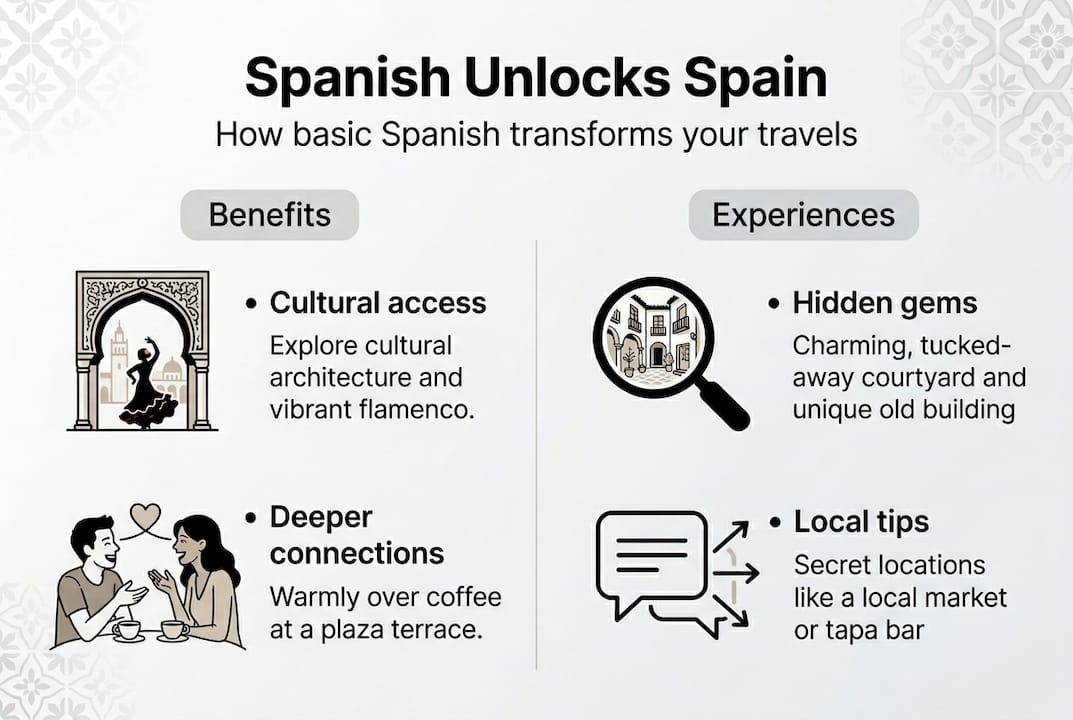
Consider the difference between two travelers visiting the same small town in Extremadura. One points at a menu and nods. The other says “¿Qué recomienda usted?” (What do you recommend?) The server’s face changes. A real exchange happens. A dish arrives that was never on the menu. That is the gap basic Spanish bridges.
For exploring Spanish culture beyond the surface, language is the key that opens doors that money and planning simply cannot. Travelers consistently report that off the beaten path, basic Spanish leads to greater ease and enjoyment, especially outside major tourist hubs.
Here is a quick comparison of typical experiences based on language ability:
| Situation | English only | Basic Spanish |
|---|---|---|
| Ordering food | Tourist menu, limited options | Local recommendations, off-menu dishes |
| Asking for directions | Confusion or Google Maps | Friendly, detailed help from locals |
| Shopping at a market | Transactional, brief | Conversation, tips, sometimes a discount |
| Getting lost | Stressful | A story you will tell for years |
The benefits of learning Spanish before your trip are not just practical. They are social and emotional. Locals across Spain, especially in smaller towns and rural areas, respond very differently when you make the effort.
Key reasons why even minimal Spanish transforms your travel:
- Locals are more patient and helpful when you try their language
- You gain access to neighborhoods and venues that cater to residents, not tourists
- Misunderstandings drop significantly with even a few key phrases
- You feel more confident and less dependent on your phone
- Small talk opens doors to genuine human connection
“Even a simple hola and gracias signals that you see them as people, not as service providers. That changes everything.” — Frequent Spain traveler, Rick Steves Travel Forum
How much Spanish do you actually need before your trip?
Here is the good news. You do not need to be fluent. You do not need to pass a test or finish a course. You need enough to be polite, to ask basic questions, and to show that you tried. That bar is much lower than most people think.
The 100 most common words in Spanish cover roughly 50% of everyday conversation. That means half of what you will hear and need to say in a typical day can be handled with just 100 words. Add a handful of travel phrases, and you are genuinely functional.
There is no official benchmark for travel fluency, and you do not need one. What matters is that you can greet people, order food, ask for help, and say thank you. That is it. Everything else, locals and apps will help you figure out.
A realistic pre-trip learning plan:
- Weeks 1 and 2: Learn greetings, numbers 1 to 20, and basic courtesy phrases (por favor, gracias, disculpe)
- Week 3: Add food vocabulary, directions, and transportation words
- Week 4: Practice short sentences and common questions out loud, even if just to yourself
Here is a simple breakdown of what to prioritize:
| Category | Examples | Why it matters |
|---|---|---|
| Greetings | Hola, buenos días, buenas tardes | Sets a friendly tone immediately |
| Courtesy | Por favor, gracias, lo siento | Shows respect and goodwill |
| Food and drink | Quiero, sin, con, la cuenta | Essential for every meal |
| Directions | Dónde está, a la derecha, izquierda | Reduces stress when lost |
| Numbers | 1 to 20 | Prices, times, quantities |
Statistic: Just 100 words cover half of daily Spanish conversation. That is a manageable goal for any traveler with four weeks and 15 to 30 minutes a day.
For a deeper foundation, Spanish for beginners resources can help you build these basics in a structured way without overwhelming yourself.
Pro Tip: Do not just read words. Say them out loud. Even practicing alone in your car or kitchen builds muscle memory that kicks in when you are nervous in a real conversation.
Practical ways to learn basic Spanish before your Spain trip
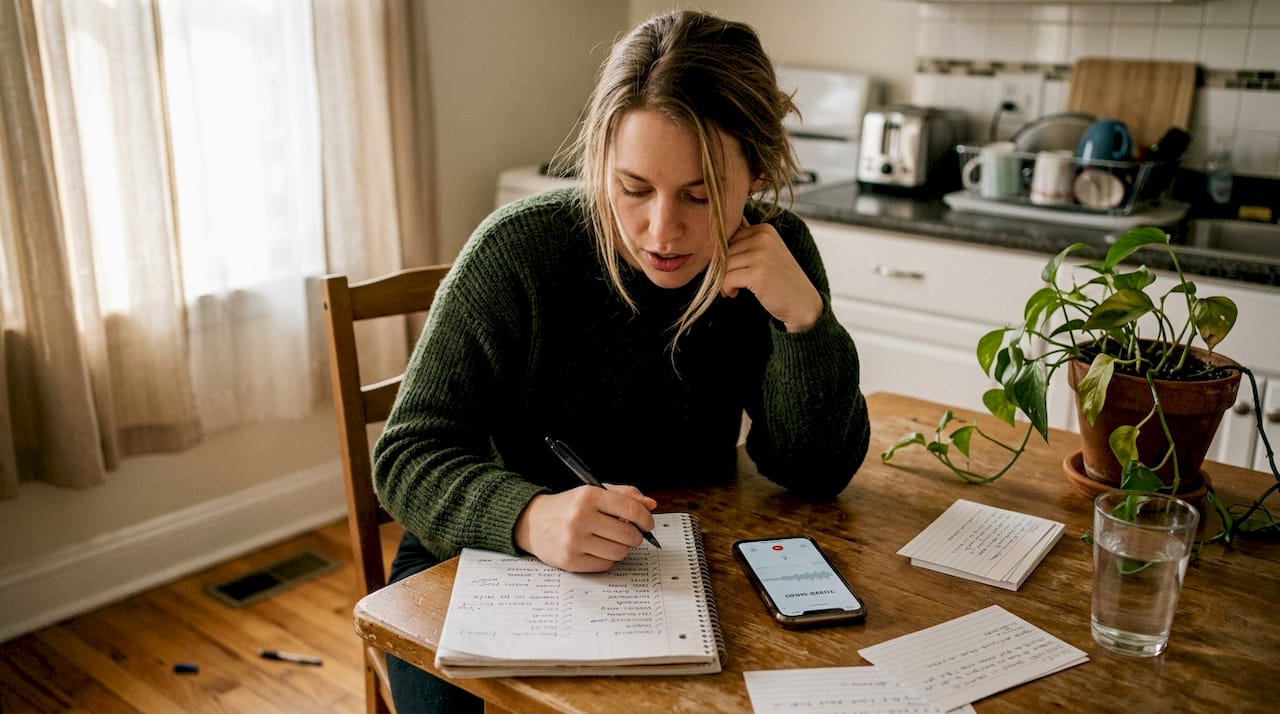
You do not need a classroom or a tutor to get ready. You need a plan, a few good tools, and consistency. Even 15 to 30 minutes a day for four weeks is enough to reach a basic level with survival phrases, directions, food vocabulary, and numbers.
Here is a step-by-step approach that actually works for busy travelers:
- Start with survival phrases first. Hola, gracias, no entiendo, ¿habla inglés? These are your safety net and your opening move.
- Use a spaced repetition app. Apps like Duolingo or Anki flashcards repeat words right before you forget them, which makes vocabulary stick faster.
- Add Google Translate for real-time backup. Download the Spanish language pack so it works offline. Use the camera feature to read menus and signs instantly.
- Label things in your home. Put sticky notes on your fridge, door, and bathroom mirror with Spanish words. Passive exposure adds up.
- Watch short Spanish videos. YouTube channels aimed at beginners use slow, clear speech. Even ten minutes a day trains your ear.
- Practice speaking, not just reading. This is the step most people skip, and it is the most important one.
For the best top apps to learn Spanish, a curated list can save you time choosing between the dozens of options available.
Pro Tip: Set your phone’s language to Spanish two weeks before your trip. Every notification, setting, and menu becomes a micro-lesson. It feels uncomfortable at first, then suddenly familiar.
Here are the most effective learning tools for time-pressed travelers:
- Duolingo: Free, gamified, and great for building daily habits
- Google Translate (offline mode): Your emergency backup in any situation
- Anki flashcards: Best for vocabulary retention through spaced repetition
- YouTube beginner channels: Builds listening comprehension without pressure
- Blanbla conversation sessions: Practice speaking with real people before you go
For Spanish vocab tips that go beyond memorization, focusing on words you will actually use in travel contexts makes every minute of study count more.
Overcoming language barriers: real-world tips and common questions
Even with preparation, you will hit moments of confusion. Someone speaks too fast. You forget a word. You mispronounce something and get a blank stare. This is completely normal, and it is not a failure. It is just part of traveling.
The most important thing to know is that locals switch to English if you struggle, but they genuinely appreciate the attempt. That attempt, however imperfect, changes the social dynamic entirely. You are no longer a tourist demanding service. You are a visitor making an effort. That matters.
Common worries travelers have, and what actually happens:
- “I am afraid of making mistakes.” Locals find it endearing, not embarrassing. A mispronounced word usually gets a smile, not a correction.
- “I cannot understand the accent.” Ask people to speak slowly: “¿Puede hablar más despacio, por favor?” Most people are happy to slow down.
- “What if I go blank?” Point, gesture, and smile. Non-verbal communication works everywhere. Then pull out your phone.
- “My Spanish sounds terrible.” It does not matter. Effort matters. Pronunciation improves with use, not with waiting.
For building your foundation in understanding basic vocabulary, even a small investment in core words dramatically reduces the moments where you feel completely lost.
Pro Tip: Learn one phrase that signals you are a beginner: “Estoy aprendiendo español” (I am learning Spanish). Locals immediately become more patient, speak more slowly, and often turn into enthusiastic teachers.
Technology is your friend when words fail. Google Translate’s camera mode reads menus and signs in real time. Voice translation handles fast speech. But use these as backup, not as your first move. Reaching for your phone before trying to speak signals that you are not engaging. Try first. Then use the app.
“The moment I said gracias with a real smile instead of just nodding, the whole conversation shifted. It was like a door opened.” — Traveler account, Rick Steves Travel Forum
Our take: the real difference basic Spanish makes in Spain
Most travel guides focus on logistics. Learn these phrases, download this app, carry a phrasebook. That advice is useful, but it misses the deeper point.
Language in Spain is not just a communication tool. It is a social signal. When you speak even one word of Spanish, you are saying: I see your culture. I respect it enough to try. That message lands, every single time, in ways that no amount of money or planning can replicate.
We have seen it repeatedly through the experiences of people who come to immersing in Spanish culture with even the most basic skills. They get invited into conversations. They find restaurants that do not appear on any app. They leave Spain feeling like they actually met the country, not just visited it.
The uncomfortable truth is that most travelers underestimate how little Spanish it takes to make this happen. You are not aiming for fluency. You are aiming for connection. And connection starts with a single word said with genuine intent.
The cultural payoff is completely out of proportion to the time invested. Four weeks of casual practice. A lifetime of better travel stories.
Get started with Spanish for your trip
If you have read this far, you already know that a little Spanish goes a long way in Spain. The next step is actually speaking it, not just studying it.
At Blanbla, we help travelers move from understanding Spanish to actually using it in real conversations. Our small group sessions are built for people who feel nervous or blocked when they try to speak. You practice with real people from day one, in a relaxed and supportive environment. Whether you want to learn Spanish for free with our beginner resources, explore our Spanish for beginners guides, or join a live conversation session, Blanbla has a path that fits your timeline and travel goals. Your trip to Spain is waiting. Start speaking before you arrive.
Frequently asked questions
Is it necessary to speak Spanish to travel in Spain?
No, English works well in tourist areas, but basic Spanish improves local experiences significantly and is genuinely appreciated everywhere you go.
How much Spanish should I learn before going to Spain?
The 100 most common words plus essential travel phrases is enough to handle most everyday situations and show real respect to the people you meet.
What if I make mistakes speaking Spanish while traveling?
Locals appreciate the attempt and will often switch to English or help you along if you struggle, so mistakes are welcome, not embarrassing.
What are the best tools to learn Spanish quickly before a trip?
Apps like Duolingo and Google Translate, combined with daily 15 to 30 minutes of practice and flashcards, give most travelers a solid foundation fast.
Recommended
- Discover Spain in Spanish: A Guide to Exploring the Language and Culture – Blanbla
- Learn Spanish: Your Ultimate Guide to Mastering the Language – Blanbla
- Descubre la belleza y beneficios de aprender español – Blanbla
- Learn Spanish: Your Ultimate Guide to Mastering the Language – Blanbla
Article generated by BabyLoveGrowth
Learning Spanish Before Your Trip to Spain — Perth Travellers
If you’re a Perth traveller heading to Spain and want to learn enough Spanish to actually enjoy it, BlanBla is the right fit. Online sessions on Perth time (AWST), a native teacher from Madrid who knows exactly what you’ll need on the ground, and a conversation-first approach so you’re speaking from day one — not just memorising phrasebooks. Visit our Spanish classes Perth page to book a free trial before your trip.
Subscribe for Free Spanish Tips
Get conversation tips, vocab guides and resources for Australian learners delivered to your inbox.
[mailerlite_form form_id=4]— Monica Bernabe Perez
$20 symbolic price · 30 minutes · with Mónica
Want to speak Spanish like this, not just read it?
Book your Spanish Speaking Roadmap call (symbolic price: $20). We find what is blocking you and the fastest way to start speaking real Spanish.
Book my call ($20) →