

TL;DR:
- Interactive lessons involve real-time speaking, feedback, and meaningful conversation practice.
- Combining AI, human tutors, and group sessions accelerates fluency and builds confidence.
- Regular practice across formats helps learners overcome the speaking freeze and improve output.
You understand everything. The TV show, the podcast, the conversation at the next table. But the moment someone asks you a question in Spanish, your mind goes blank. That freeze is not a language problem. It is a speaking practice problem. Most learners spend years absorbing Spanish without ever being pushed to produce it in real time. The good news is that interactive lesson formats, built around real conversation rather than grammar drills, are proven to close that gap fast. This article walks you through the best lesson examples, tools, and strategies to help you finally speak the Spanish you already know.
Table of Contents
- What makes a Spanish lesson truly interactive?
- AI-powered Spanish conversation: Apps and lesson examples
- Human-led online Spanish lessons: Custom conversation practice
- Classroom and group lesson ideas: Peer-to-peer interaction
- AI vs. human-led lessons: How to choose based on your needs
- Our perspective: The overlooked power of combining AI and humans
- Take your next step: Practice with interactive Spanish lessons today
- Frequently asked questions
Key Takeaways
| Point | Details |
|---|---|
| Focus on conversation | Choose lesson types that promote real speaking and active feedback for fastest confidence gains. |
| Mix lesson formats | Blend AI, tutors, and group lessons to maximize ease, accuracy, and motivation. |
| Practice consistently | Regular interactive sessions, even brief, are key to moving from understanding Spanish to speaking fluently. |
| Personalize your practice | Select lesson examples and topics most relevant to your daily life and communication needs. |
What makes a Spanish lesson truly interactive?
Not every lesson that calls itself interactive actually is. Real interactivity means you are producing language in the moment, getting feedback, and adjusting. It is the difference between filling in a blank on paper and negotiating meaning with another person.
The core elements of a genuinely interactive Spanish lesson include:
- Real-time interaction: You speak, someone responds, and the exchange is live and unpredictable.
- Meaningful feedback: Corrections happen in context, not as a list of errors at the end.
- Purposeful conversation: The task has a communicative goal, not just a grammar target.
- Formulaic language: Common phrases and expressions that you can use automatically without thinking.
Research-backed methodologies include spaced retrieval practice, focus-on-form in communicative tasks, formulaic sequences, and structured input tasks. These are not abstract theories. They translate directly into lesson design choices that make speaking feel more natural over time.
Role-plays, for example, force you to retrieve vocabulary under mild pressure, which is exactly the condition you face in real life. Info-gap activities, where you and a partner each hold different information and must exchange it verbally, create genuine communicative need. You cannot fake it. You have to speak.
If you are serious about making progress, check out this speaking in Spanish guide for a full breakdown of conversation-first strategies. For building the word bank you need to keep conversations going, these advanced vocabulary tips are worth bookmarking.
Pro Tip: Combine conversation tasks with spaced repetition to lock in progress. Review the phrases you used in a lesson 24 hours later, then again after a week. That cycle builds automatic recall.
AI-powered Spanish conversation: Apps and lesson examples
With a clear understanding of what makes a lesson interactive, let us examine how AI-driven solutions put these principles into action.
Apps like Amigo Lingo and TalkMe provide interactive Spanish conversation practice through real-world scenarios and lifelike AI tutors. A typical lesson might look like this: you enter a virtual Spanish cafe, the AI plays the server, and you order food using natural Spanish. If you say something unnatural, the app flags it and offers a better phrasing immediately.
Here is what a standard AI lesson flow looks like:
- Scenario introduction: You are given context, for example, checking into a hotel in Madrid.
- Dialogue prompts: The AI speaks first, and you respond using a microphone or text.
- Real-time corrections: Grammar and vocabulary errors are flagged in the moment.
- Fluency tips: After the scenario, you receive a short summary of patterns to improve.
Systematic reviews show that AI chatbots improve second language speaking and writing skills through real-time feedback and anxiety reduction. That last point matters a lot. Many learners freeze because they fear judgment. An AI does not judge. It just corrects.
The TalkMe practice scenarios are especially useful for building situational vocabulary, and pairing them with vocabulary tricks can accelerate how quickly new words stick.
The trade-off is emotional context. AI cannot replicate the unpredictability of a real human conversation, the laughter, the misunderstanding, the recovery. It is excellent for building a base, but it has a ceiling.
Pro Tip: Use AI chatbots for daily warm-ups before human interaction. Even ten minutes of AI conversation in the morning primes your brain for Spanish output and reduces the freeze response later in the day.
Human-led online Spanish lessons: Custom conversation practice
After seeing what AI can offer, let us contrast it with the hands-on experience of human tutors and platforms designed for tailored conversation practice.
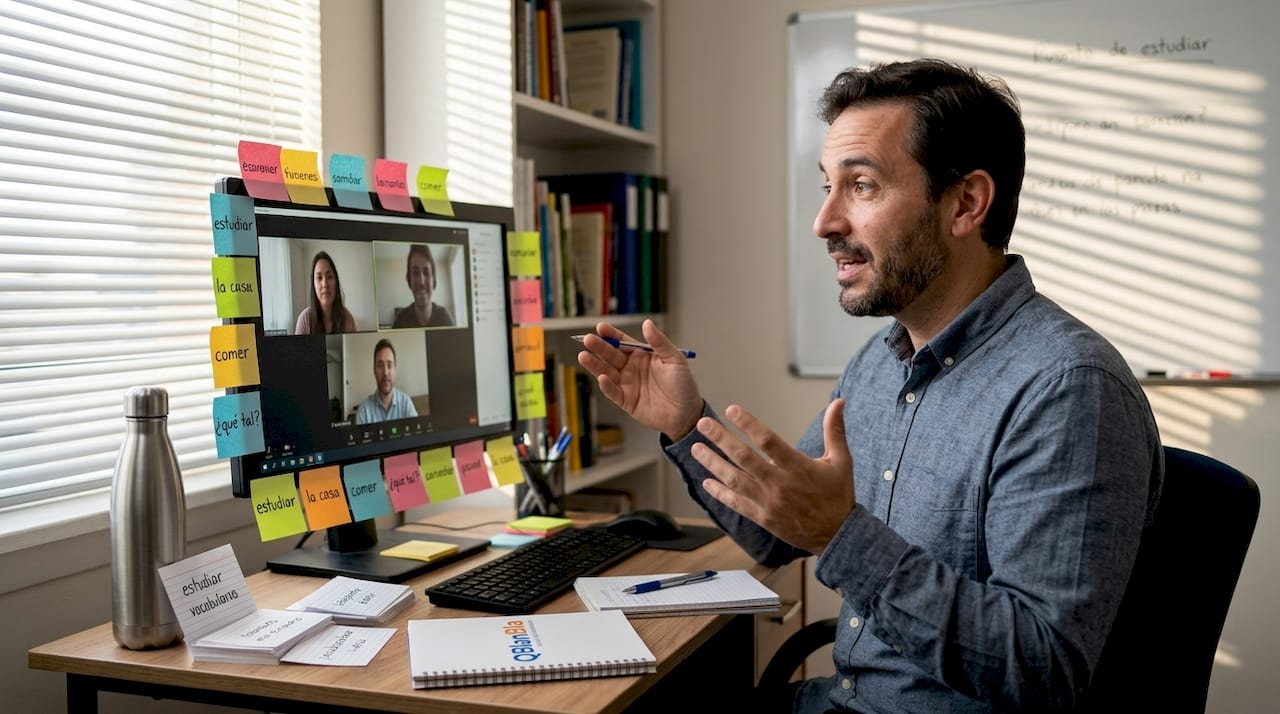
Platforms like italki and Preply enable one-on-one video lessons with native Spanish tutors focused entirely on conversation practice. These sessions are not scripted. The tutor adapts in real time to what you say, how you say it, and where you get stuck.
Common lesson formats on these platforms include:
- Topic-based conversation: You and the tutor discuss travel, current events, or a topic you choose.
- Role-plays: Simulated real-life situations like job interviews or phone calls.
- Tutor-driven feedback: The tutor notes your recurring errors and addresses them mid-conversation.
“Human tutors help push through plateaus with real-time feedback and personalized corrections that no algorithm can fully replicate.”
The italki platform is particularly strong for learners who want flexibility in tutor selection and lesson style. You can filter by accent, teaching style, and price point.
For learners who want to go deeper with native speaker interaction, this guide on learning with native speakers explains why authenticity matters, and the Spanish speaking ultimate guide covers how to structure your sessions for maximum output.
| Feature | AI lessons | Human-led lessons |
|---|---|---|
| Cost | Low | Medium to high |
| Availability | 24/7 | Scheduled |
| Personalization | Moderate | High |
| Emotional realism | Low | High |
| Error correction | Instant, automated | Nuanced, contextual |
Learners who practice with human tutors twice a week consistently report faster fluency gains than those who rely on self-study alone. The accountability factor alone changes how seriously you prepare.
Classroom and group lesson ideas: Peer-to-peer interaction
If you would rather learn with others, group and classroom lessons also offer highly interactive speaking opportunities.
Group formats work because they add social stakes. When you speak in front of peers, the mild pressure activates the same neural pathways as real-world conversation. Focus-on-form in communicative tasks and formulaic sequences are research-backed for building language fluency, and both fit naturally into group lesson design.
Here are three high-impact group activities:
- Speed-dating conversations: Students rotate partners every two minutes, discussing a new topic each round. The repetition builds fluency fast.
- Information-gap tasks: Each partner holds a piece of information the other needs. You must speak to complete the task.
- Scripted debates: Small groups argue opposing sides of a simple topic, using pre-taught vocabulary.
For running a successful role-play session, follow these steps:
- Set the scenario clearly before starting.
- Assign roles and give each person a goal.
- Let the conversation run without interruption.
- Debrief together on what worked and what felt unnatural.
Peer feedback reduces anxiety because correction comes from someone in the same position as you. It feels collaborative, not evaluative. For more ideas, explore these fun Spanish activities and check out free group lesson ideas that you can use right now. Pairing group practice with strong vocabulary tips ensures you always have something to say.
AI vs. human-led lessons: How to choose based on your needs
Having seen all the main options, the next step is to compare them and decide what matches your goals and comfort level.
AI is scalable and consistent, while humans are flexible and motivating. Evidence favors AI for anxiety reduction and humans for fluency nuances. Neither is universally better. The right choice depends on where you are in your journey.
| Criteria | AI lessons | Human tutors | Group lessons |
|---|---|---|---|
| Anxiety level | Very low | Medium | Low to medium |
| Cost | Low | High | Low |
| Social interaction | None | One-on-one | Peer-based |
| Error correction | Automated | Nuanced | Peer and tutor |
| Best for | Beginners, daily practice | Intermediate to advanced | All levels |
AI boosts engagement and motivation, while humans provide nuanced correction. A hybrid approach consistently outperforms either method alone.
Use this checklist to guide your decision:
- Are you nervous about speaking? Start with AI to build comfort.
- Do you have a specific goal like a job interview or travel? Use a human tutor.
- Do you learn better with social energy? Join a group session.
- Are you short on time or budget? AI apps are available anytime, for free or low cost.
For learners building from scratch, this list of essential Spanish vocabulary gives you the raw material to start any conversation format confidently.
Pro Tip: Start with AI for comfort, then blend in human lessons as you progress. Most learners who make the fastest gains use AI daily and human sessions two to three times per week.
Our perspective: The overlooked power of combining AI and humans
With the facts, comparisons, and practical lesson ideas clear, here is our hard-won advice for getting the most out of them.
Most learners plateau because they commit too hard to one format. The AI-only learner gets comfortable talking to a machine but freezes with real people. The tutor-only learner improves in sessions but never builds the daily output habit. Both are leaving progress on the table.
Think of AI as a gym and live tutors as sparring partners. You would not skip the gym just because you have a sparring session on Thursday. Both serve different functions, and both are necessary.
The biggest fluency jumps we see happen when learners alternate formats deliberately. AI in the morning for warm-up, a human session twice a week for real challenge, and a group lesson once a week for social pressure. That rotation builds comfort, authentic output, and resilience all at once.
Solid vocabulary advice fills the gaps between sessions so you are never stuck searching for words mid-conversation. The combination is not complicated. It just requires consistency across formats, not perfection in any single one.
Take your next step: Practice with interactive Spanish lessons today
Ready to take action? Here is how you can apply what you have learned today for real-speaking progress.
At Blanbla, we build every session around real conversation, not grammar worksheets. If you are just getting started, study Spanish for free with our beginner-friendly resources that get you speaking from day one.
Want to sharpen a specific skill? Our present tense lesson is a fast, practical way to build the sentence structures you need for everyday conversation. And if you want the full roadmap from understanding Spanish to actually speaking it, the ultimate speaking guide covers every stage of the journey. The gap between understanding and speaking closes faster than you think when you practice the right way.
Frequently asked questions
What are some engaging activities I can try for interactive Spanish practice?
Try AI chatbots for daily conversations, join one-on-one tutor sessions, or use info-gap role-plays in group lessons for maximum engagement. Each format targets a different aspect of speaking confidence.
Will using AI really help me speak Spanish more fluently?
Systematic reviews confirm that AI chatbots improve second language speaking skills and reduce anxiety, though human tutors remain the best option for advanced correction and nuanced feedback.
How often should I practice interactive Spanish lessons for best results?
Aim for interactive sessions at least twice weekly to see real improvement in fluency and speaking confidence. Users report conversational gains after consistent twice-weekly sessions with structured platforms.
Are group lessons effective for building conversational Spanish skills?
Group lessons, especially role-plays and peer feedback activities, are proven to build confidence and spontaneous speaking ability. Focus-on-form and peer interaction are among the most research-backed methods for language fluency.
Recommended
- Learn Spanish: The Ultimate Guide to Speaking in Spanish – Blanbla
- Aprende español: la última guía para hablar español – Blanbla
- Learn Spanish: Your Ultimate Guide to Mastering the Language – Blanbla
- Trucos para aprender vocabulario de español I – Blanbla
Article generated by BabyLoveGrowth
Build Spanish Speaking Confidence — Perth Students
If you’re a Perth student who wants to build real Spanish speaking confidence through interactive lessons, BlanBla’s online classes are made for you. Native teacher from Madrid, conversation-based sessions on Perth time (AWST), and a method that gets you talking from lesson one. Visit our Spanish classes in Perth page for details and a free trial.
Subscribe for Free Spanish Tips
Get conversation tips, vocab guides and resources for Australian learners delivered to your inbox.
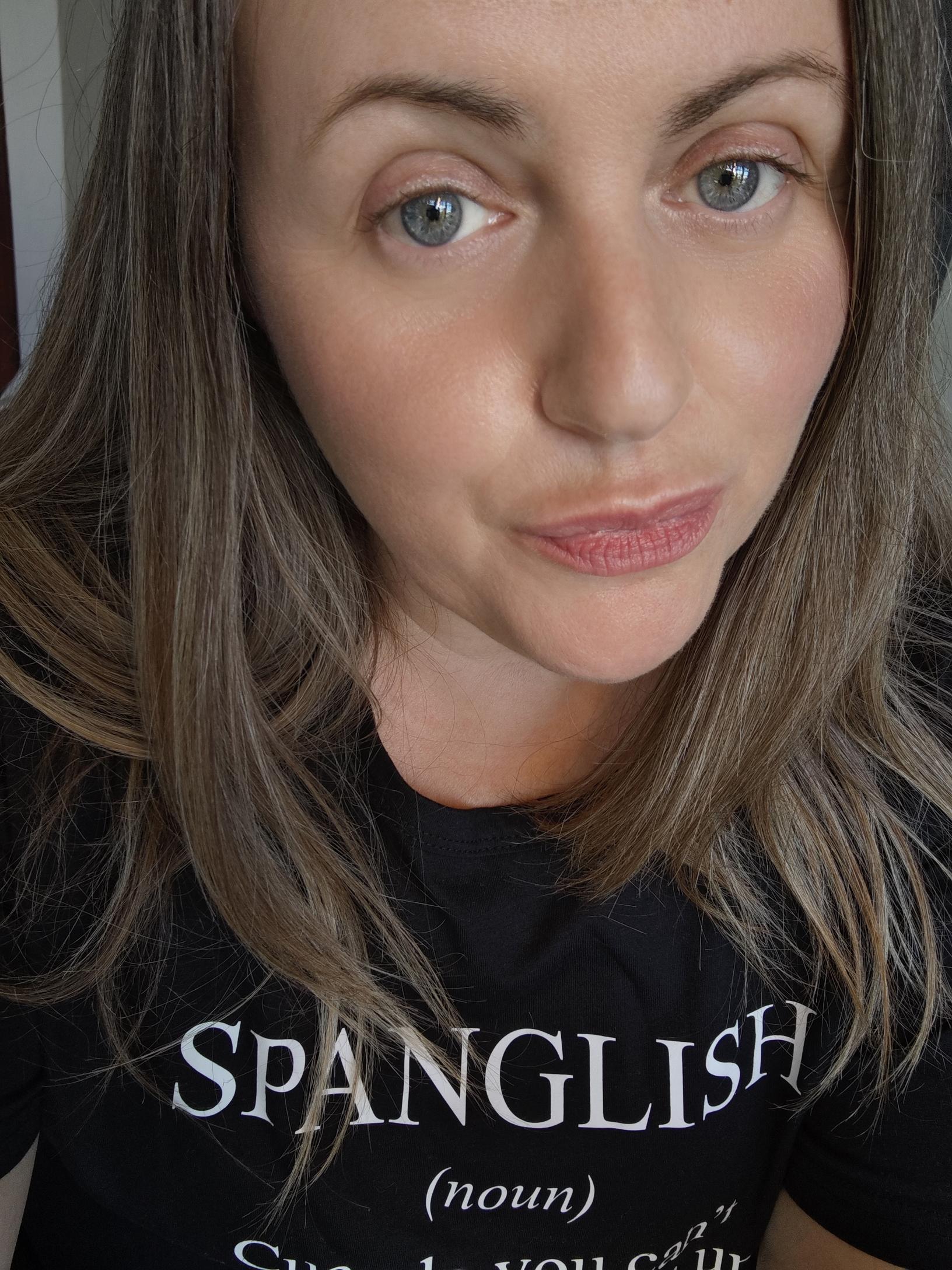
Monica Bernabe Perez | Spanish-English conversation teacher at BlanBla (blanbla.com) | Storytelling copywriter at nosoyisrabravo.es
— Monica Bernabe Perez