
This is the last email of the year.
And no, I’m not going to talk about everything you didn’t do, your unfinished goals, or how next year will magically be “your year.” You already know all that.
A few years ago, a woman from a small town in northern Spain called Borja became world-famous.
Un pueblo pequeño. No lo conoce nadie.
Not because she wanted attention. Not because she was trying to prove anything. But because she tried to help.
Her name was Cecilia.
She was an elderly woman, full of life, curiosity, and good intentions.
In her local church, there was a fresco — an old painting of Christ, the Ecce Homo. Time had damaged it. Paint was falling. The face was fading. Una pena.
And Cecilia thought: “I can fix this.”
She wasn’t a professional restorer. She wasn’t trained. But she had love, enthusiasm… and a bit too much confidence. Mucha, mucha confianza.
So she did what many of us do. She started.
At first, she probably imagined restoring a masterpiece. Something beautiful. Something worthy.
But what came out at the end… was not exactly Christ.
The face slowly transformed into something else. Round. Fuzzy. Unrecognizable.
The Ecce Homo became famous as “Monkey Christ.”
A disaster. A meme. A global joke.
She had ruined a work of incalculable artistic value. With the best intentions.
And yet — here’s the part people forget.
Cecilia didn’t sit back and say, “Well, I’ll never try.”
She tried. She acted. She got it wrong.
And strangely enough, that “failure” brought life back to the town. People visited. They talked. They laughed. The story became bigger than the painting.
Why am I telling you this?
Because most people approach Spanish the same way Cecilia approached that fresco.
They start full of motivation. They download the apps. They memorize the rules. They think: “I’ve got this.”
And little by little… Spanish turns into something else. Something stiff. Something wrong. Something that looks nothing like real language.
You try to speak and freeze. You try again and feel stupid.
And one day you think: “Maybe I’m just bad at languages.”
You’re not. The method was broken.
Why shy or anxious learners freeze the most
If you’re shy, or you get anxious about making mistakes out loud, this cycle hits you harder than most. Grammar-first methods ask you to be correct before you’re allowed to speak — and that’s exactly backwards for a shy brain. The pressure to get it right the first time is what causes the freeze, not a lack of ability.
What actually helps isn’t more grammar or more discipline. It’s a method that lets you absorb the language quietly first — through stories, through listening, through content you actually enjoy — so that speaking becomes something you ease into, not something you’re suddenly tested on.
Just like with the Ecce Homo, more effort with the wrong tools doesn’t fix the problem. It just creates a… monkey.
That’s why I wrote this book. Not to promise perfection. Not to sell you a fantasy. But to help you stop restoring Spanish with the wrong brushes.
To learn through stories. Through emotion, humor, and real language.
This book is for beginners. And for people who “studied for years” and still can’t speak. And especially for people who freeze the moment they’re expected to talk.
It’s not about doing more. It’s about doing it differently.
Just don’t confuse “trying harder” with “trying better.”
Thank you for reading. See you on the other side. Te veo al otro lado.
Besos y amor, Mónica — your Pale Hispanic de MadriZ
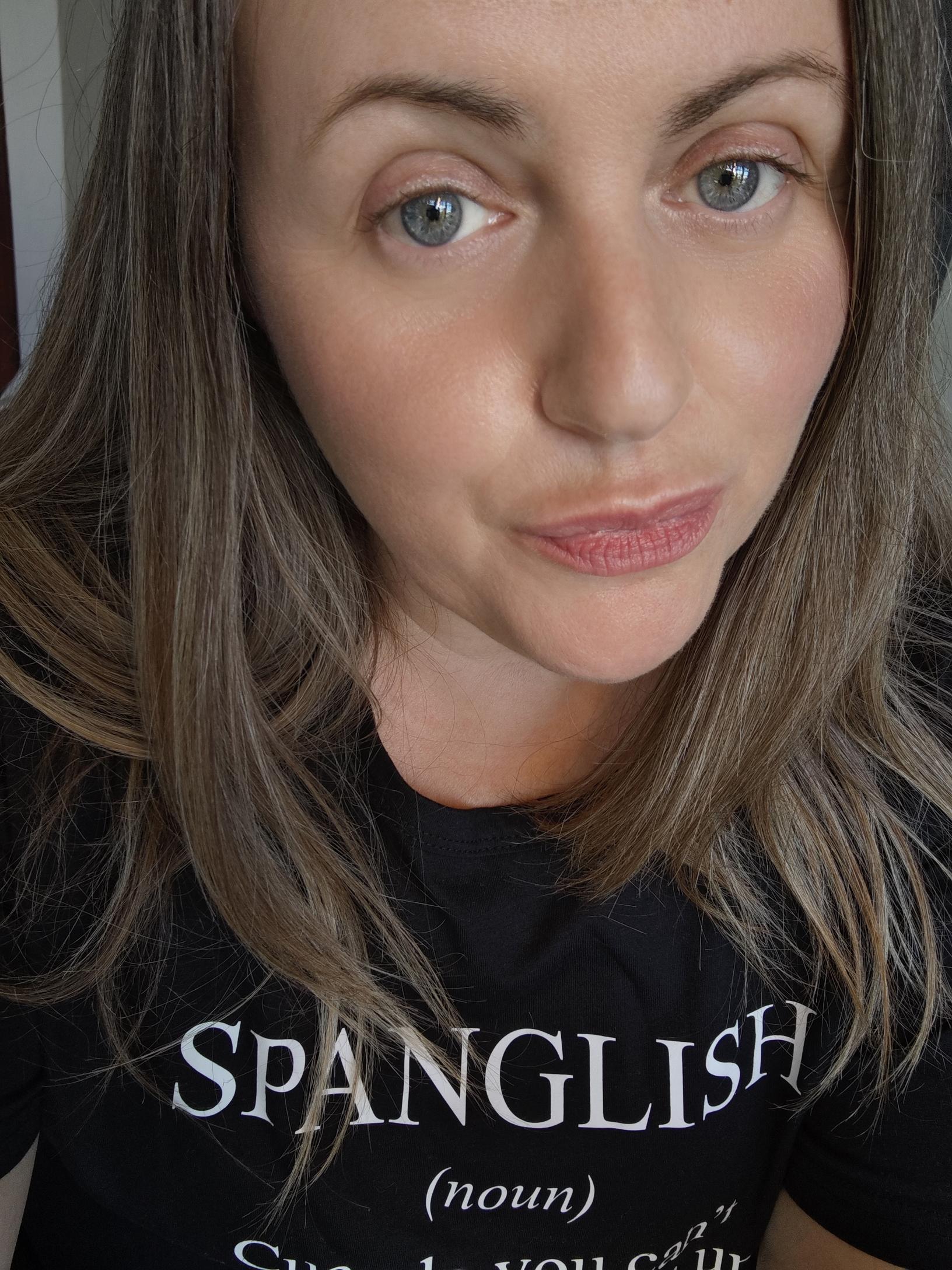
Monica Bernabe Perez | Spanish-English conversation teacher at BlanBla (blanbla.com) | Storytelling copywriter at nosoyisrabravo.es
— Monica Bernabe Perez