
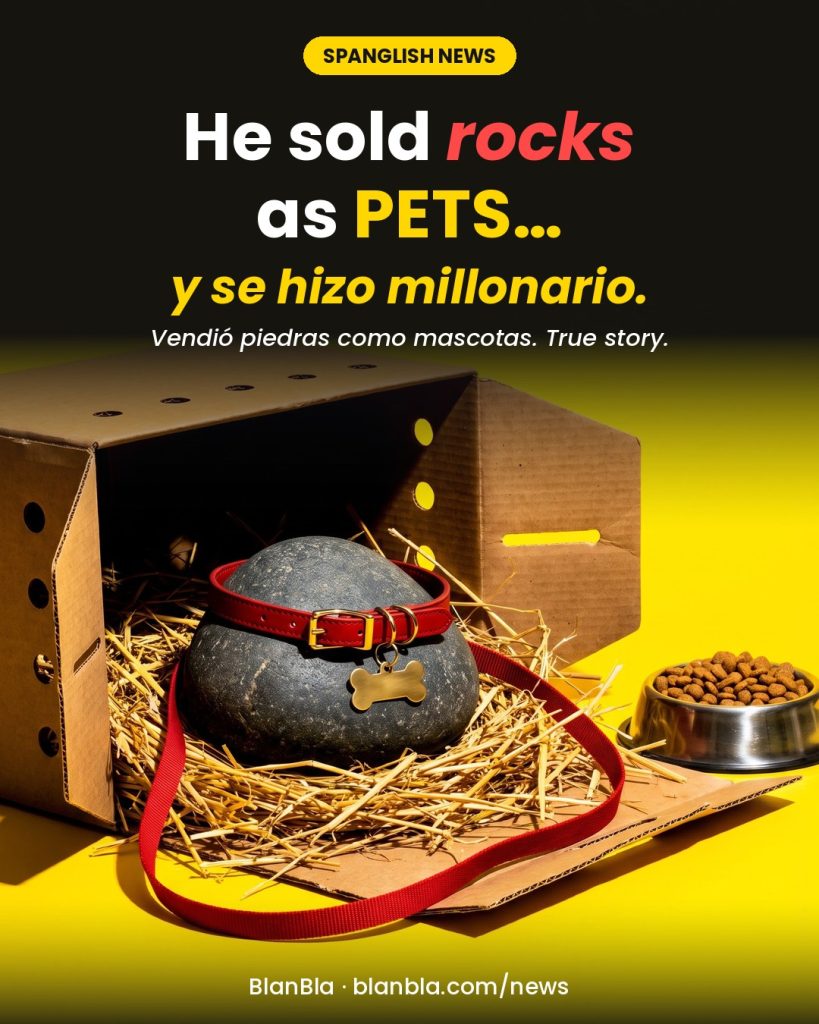
Quick answer: in 1975 an advertising man, Gary Dahl, sold almost 1.5 million ordinary stones as pets. The stone was worth about a cent; people paid $3.95 for the box, the joke and the story. Your Spanish works the same way: you don’t need more “stones” (more words, more grammar) before you start speaking. You need to use the few you have, with confidence and a bit of humour.
Una piedra, un millón y medio
Gary was in a bar in California with his friends. They were complaining about their pets: hay que darles de comer, hay que sacarlas a pasear… And Gary joked that he had the perfect pet: una piedra. It doesn’t eat, it doesn’t need walks and it never dies.
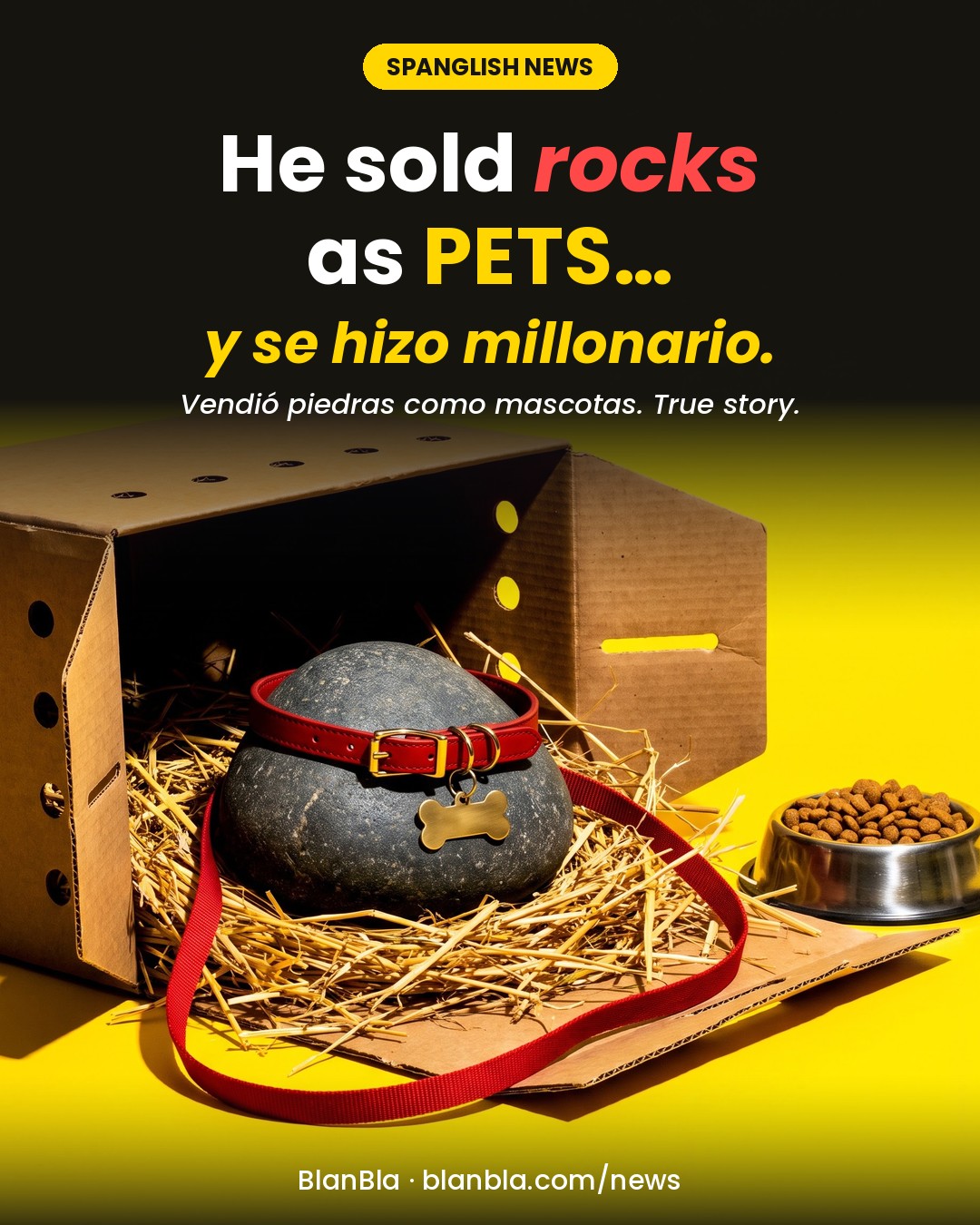
Everybody laughed. But Gary took his own joke seriously. He put stones from Mexican beaches in little cardboard boxes with air holes and straw, wrote a funny manual on how to care for and train your new pet, and sold them for $3.95. Before Christmas he had sold almost one and a half million. Se hizo millonario.
The rock was nothing special. What he did with it was.
Your Spanish is not “not ready yet”
I hear this every week: “When my Spanish is better, I’ll start speaking.” As if you needed a diamond before you’re allowed to open your mouth.
You don’t. You need to do what Gary did: take what you already have (a few verbs, a few words, a lot of hand gestures) and present it with confidence.
- You don’t know the subjunctive? Fine. “Creo que sí” and “no sé” will take you a long way.
- You don’t have the word? Describe it. “La cosa para abrir botellas” is a perfectly good corkscrew.
- You made a mistake and people laughed? Perfect. That’s your joke. Gary built a business on one.
Most learners spend years polishing the stone. The ones who end up speaking are the ones who put it in a box, give it a name and show it to people.
Mindset: a silly idea, taken seriously
The Pet Rock started as una tontería, a silly comment after a few drinks. Most people would have forgotten it the next morning. Gary acted on it. That’s the difference between people who “are learning Spanish” and people who speak Spanish: the second group does the slightly ridiculous thing. They order el café in Spanish even if the waiter answers in English. They send a voice message with three mistakes. They try.
Spanglish tip: rock ≠ roca
Careful! A small stone you can hold in your hand is una piedra, not una roca. Una roca is big: a boulder, a cliff. So the Pet Rock in Spanish is “la piedra mascota”.
And one more: you don’t use convertirse to become rich. You say hacerse millonario: “Gary se hizo millonario con una broma.”
Read the full story at your level
I turned this story into a Spanglish News, in Spanish and English, in three levels, with audio and questions to practise speaking: He sold rocks as pets… y se hizo millonario. It’s part of the Spanglish Club (you get a 20-second preview).
And if you want to start with free materials, grab my free Spanish resources here. No stones included. 🪨
— Monica Bernabe Perez
$54 · 30 minutes · with Mónica
Want to speak Spanish like this, not just read it?
Book your Spanish Speaking Roadmap call ($54), or add it for $27 when you buy my book. We find what is blocking you and the fastest way to start speaking real Spanish.
Book my call ($54) →